
•
Blog

If your calendar is full weeks or even months in advance, it’s easy to assume reviews aren’t a priority anymore. You’re already getting consistent demand. Customers are finding you.
Your schedule is packed.
So naturally, reviews can start to feel like something that helped you get here—not something you need to stay here. But that’s where many businesses get it wrong. Being booked out is a result of visibility, trust, and consistent proof that your business is still delivering. And reviews are a big part of that equation.
When you stop actively collecting reviews, you’re weakening the signals that keep your business ranking, converting, and staying in demand. Because the reality is, being fully booked isn’t a fixed state. It’s something that needs to be maintained. And reviews are what make that possible.
Reviews Boost (and Keep) Your Local SEO
Getting booked out doesn’t happen by accident and it definitely doesn’t sustain itself without ongoing effort.
The same way you didn’t build a great reputation overnight, you can’t rely on past momentum to carry you forever. Reviews play a major role in how platforms like Google rank local businesses. And it’s not just about how many reviews you have, it’s about how recent and consistent they are. A steady stream of recent reviews signals that your business is active, relevant, and still delivering a strong customer experience.
Recent reviews help to:
-
Improve your position in local search results, including AI overviews and AI search. This ensures that when someone’s searching for “plumber near me”, your business is showing up.
-
Signal ongoing activity and demand to both Google and potential customers.
-
Strengthen your credibility at the exact moment customers are comparing options.
The higher you rank, the more visibility you get. And the more visibility you get, the more consistently you stay booked out.
But when reviews slow down or stop, that signal weakens. Even if you’ve built up hundreds of great reviews in the past, a lack of recent activity can cause your rankings to gradually slip. And when your visibility drops, you’re no longer one of the first options customers see.
Think of it like going to the gym. You don’t get in shape, hit your goal, and then stop completely while expecting the results to stay the same. The progress only sticks if you keep showing up consistently even if it’s just to maintain what you’ve already built. Reviews work the same way. They’re not just what help you get booked out, they’re what help you stay booked out.
Learn more about why recent reviews matter
Read the full blog where we cover the importance of recent reviews in boosting SEO and earning customers trust.
Read More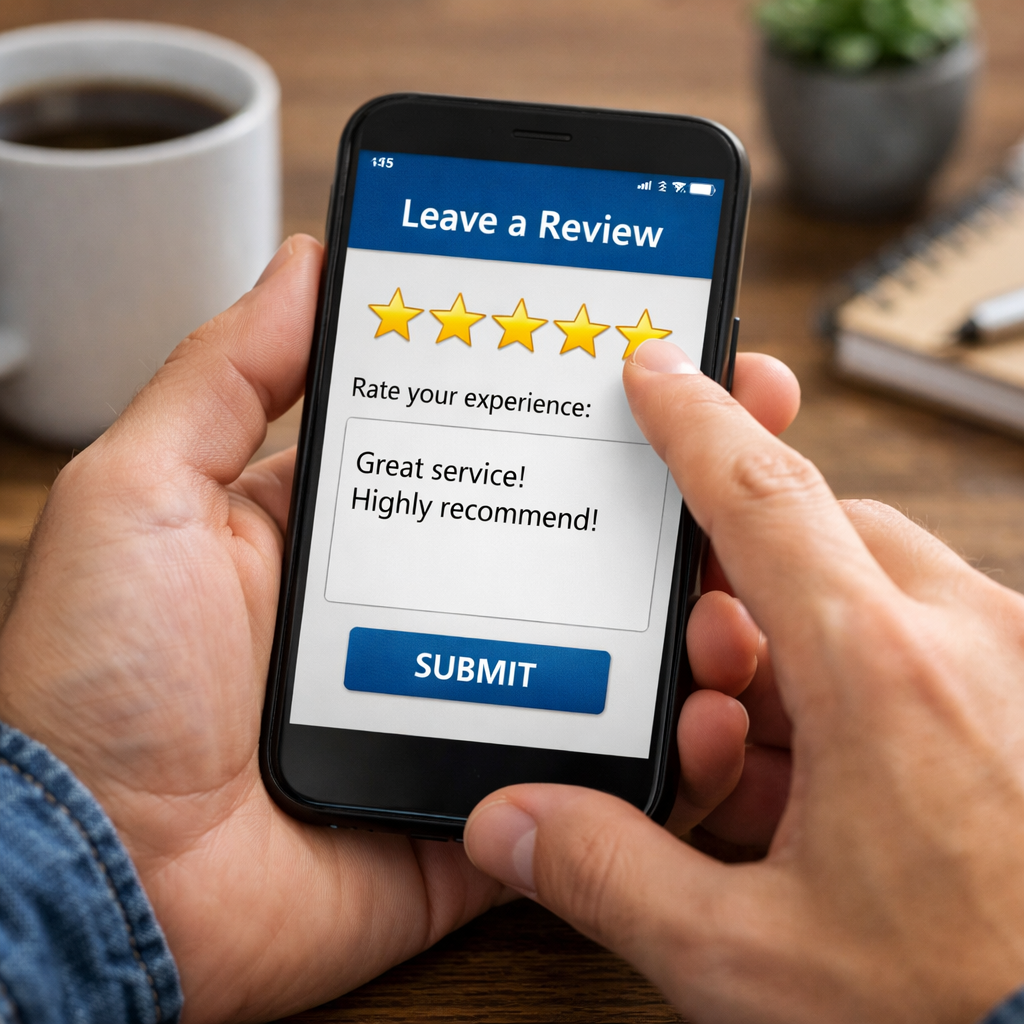
Reviews Buffer Against Demand Volatility
Demand fluctuates and often faster than expected. Seasonality, economic shifts, new competitors, staffing changes, or even platform algorithm updates can all impact how quickly your calendar fills. What feels like consistent overflow today can quietly turn into gaps tomorrow.
Reviews act as a buffer against that volatility.
A steady stream of recent, positive feedback keeps your business visible, credible, and relevant—so when availability opens up, you’re not starting from scratch trying to rebuild momentum. Because when things do slow down, having only older reviews puts you at a disadvantage.
To put it into perspective, let’s look at an example. Imagine two businesses offering the exact same service—both fully booked. The first has a high volume of recent, detailed 5-star reviews coming in every week. It’s clear they’re still delivering a great experience consistently, not just in the past. The second also built a strong reputation, but their last few reviews are from several months ago. There’s solid history there, but no recent proof that the same level of service is still being delivered today.
This leaves potential customers wondering:
-
Is the experience still the same?
-
Is the business still in demand?
-
Are customers still happy?
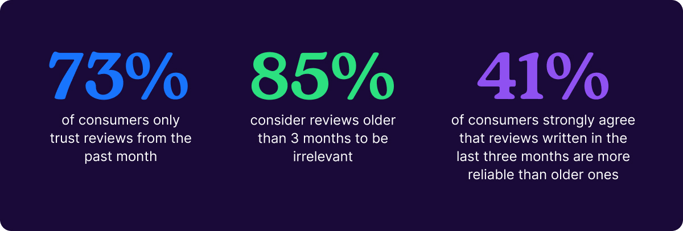
Both businesses are busy. But only one is actively reinforcing that they’re reputation still stands today. That’s the difference. A steady stream of recent reviews signals consistency. It tells potential customers that your quality hasn’t dropped, your service hasn’t slipped, and your experience is still the same. In fact, 73% of customers only trust reviews from the last month and 85% of customers consider any review older than 3 months to be irrelevant.
Even if nothing has changed operationally, perception shifts quickly. And the challenge is, once that momentum is gone, it’s much harder to rebuild. You’re not just filling your schedule again—you’re also trying to restart the flow of fresh reviews that signal trust and activity.
Reviews Keep You Connected to the Customer Experience
When your business is busy, it’s not just about keeping up—it’s about making sure you’re still delivering the same (or better) experience that got you there in the first place. That means understanding what’s working, what’s not, and where there’s room to improve.
The challenge is, when operations get busy, it’s easy to become inward-focused by managing schedules, staff, and day-to-day execution. You’re focused on getting the work done, not necessarily stepping back to evaluate how it’s being experienced. For example, maybe your team has gotten faster at keeping up with demand but communication has become a bit more rushed. Customers aren’t complaining directly, but you start to see subtle comments in reviews about feeling unclear on timelines or next steps.
On their own, those comments seem minor. When you’re at capacity, even minor inefficiencies (longer wait times, unclear communication, inconsistent service) can compound quickly. Left unchecked, they can start to impact overall satisfaction and, eventually, your reputation.
That’s exactly why reviews matter even more when you’re booked out.
They create a continuous feedback loop that highlights:
-
What customers consistently love (so you can double down on it)
-
Where expectations may not be fully met
-
Small friction points that don’t always surface in person
Reviews tell you what customers are saying publicly, but feedback tools can help you understand the experience even earlier.
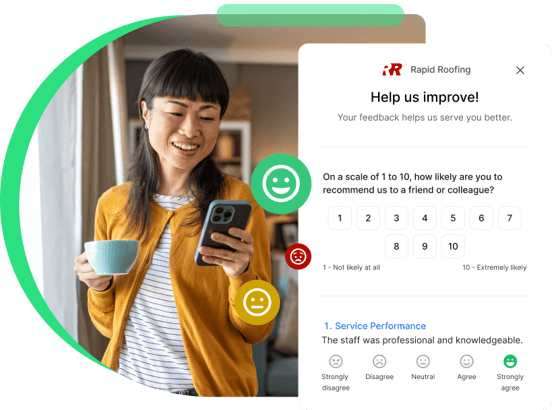
With NiceJob's NPS Surveys feature, you can proactively gather customer feedback and measure satisfaction before issues start surfacing in public reviews. Instead of waiting until someone leaves a negative comment online, NPS Surveys help you understand how customers feel throughout their experience and identify potential issues before they become bigger problems.
Pair that with NiceJob Insights and you’re able to analyze your feedback at scale. Its AI-powered sentiment analysis helps you quickly understand what customers are generally saying, without having to read through every individual review.
You can spot patterns like:
-
Recurring praise around a specific service or staff member
-
Subtle complaints that are starting to show up more frequently
-
Shifts in sentiment over time as your business grows or changes
Even more powerful, you can compare that sentiment against competitors, giving you a clearer picture of where you stand in your market and where you can differentiate.
Instead of reacting to issues once they become obvious, you can catch them early while they’re still small, fixable, and largely invisible to most customers.
This is especially important when you’re fully booked. At that point, growth doesn’t come from more volume, it comes from improving efficiency, refining the experience, and increasing spend per customer. Reviews and customer feedback give you the insight to do exactly that.
The Bottom Line
If you’re booked out, reviews have already played a role in getting you there but their value doesn’t stop once your calendar is full. They keep your reputation current and credible. And they make sure that when availability opens up again, you’re not rebuilding momentum from scratch.
Because being busy isn’t a fixed state but perception is constantly evolving. The businesses that stay consistently in demand aren’t the ones that stop asking for reviews once they’re full. They’re the ones that keep the momentum going in the background, so growth never stalls.
The goal isn’t just to stay booked. It’s to stay in demand, stay valuable, and keep customers choosing you—no matter how far out you’re scheduled.
Want to turn your reviews into real business improvements?
Learn how to run a simple review audit, uncover patterns in customer feedback, and turn insights into action.
Read More


.jpg)