
Last updated: April 2026
Reputation management for small businesses is the practice of actively shaping how your business appears to potential customers—across Google, review platforms, directories, and increasingly, AI search tools like ChatGPT and Google AI Mode.
For a small home service business, this used to mean responding to the occasional bad review and hoping word of mouth did the rest. That's no longer sufficient.
Today, your reputation lives across dozens of platforms simultaneously, and customers check multiple sources before making a decision. A landscaping company with 12 reviews from 2022 looks less trustworthy than a competitor with 80 reviews from the last six months—even if the quality of work is identical. Recency and volume both matter.
The good news: reputation management for a small business doesn't require a marketing team or an enterprise software budget. It requires a clear understanding of what it actually involves, and a system that handles most of it automatically.
What Reputation Management Actually Means for a Small Business
For a small service business getting started with reputation marketing, we recommend focusing on four core things:
Generating reviews consistently
Not in bursts after a particularly good month, but as a steady, ongoing process tied to every completed job. Recency matters to both customers and search algorithms. A business with five new reviews this month looks more active and trustworthy than one with 50 reviews from three years ago.
Responding to reviews
Both positive and negative. Responding to positive reviews acknowledges the customer and signals to prospective customers that you're engaged. Responding to negative reviews (calmly and constructively) demonstrates professionalism and often matters more than the negative review itself.
Maintaining consistent information across platforms
Your business name, address, phone number, and hours should be identical across Google Business Profile, Facebook, Angi, HomeAdvisor, and any other directory where you appear. Inconsistencies confuse search engines and customers alike.
Monitoring your online presence
Knowing when a new review is posted, when your business is mentioned somewhere online, or when your information appears incorrectly somewhere gives you the ability to respond quickly and stay in control of the narrative.
👉Check out Why Recent Reviews Matter (and How to Get More of Them)
Why Reputation Management Matters More Than It Used To
Three things have changed the stakes for small service businesses in recent years.
AI search is now part of the customer journey
When someone asks ChatGPT or Google AI Mode to recommend a plumber, HVAC technician, or cleaning service in their area, the AI synthesizes information from reviews, directories, and online mentions to form its recommendation. Businesses with stronger review signals (more reviews, more recent, across more platforms) are more likely to be recommended. Reputation management now feeds AI visibility, not just traditional search rankings.
Review volume expectations have increased
Customers have become more skeptical of businesses with small review counts, partly because fake reviews have made people more discerning. A business that looks active and well-reviewed across multiple platforms is harder to dismiss than one that relies on a handful of testimonials on its own website.
The cost of a poor online reputation compounds over time
Unanswered negative reviews, arguing with customers in the comment section of your social media profiles or on Google Reviews, outdated hours, or a generally inactive looking Google Business Profile…those are all things that negatively impact your reputation and the cost compounds over time. Even a company with some historic blemishes can turn it around if their more recent activity shows regular reviews that are responded to with professionalism.
The Biggest Reputation Management Mistakes Small Businesses Make
Waiting for customers to leave reviews on their own
Most satisfied customers don't leave reviews unless prompted. The businesses with the most reviews aren't the ones with the happiest customers, they're the ones with the best systems for asking.
Asking at the wrong time
Timing matters. The best moment to request a review is immediately after the job is completed and the customer is satisfied—not a week later when the moment has passed.
Ignoring negative reviews
A negative review with no response looks worse than the review itself. A professional, empathetic response demonstrates accountability and often changes how prospective customers interpret the original complaint.
Treating reputation management as a one-time project
Running a review campaign once a year and considering it done doesn't work. Reputation management is an ongoing process, and the businesses that win are the ones that make it systematic rather than occasional.
Focusing only on Google
Google is the most important platform for most service businesses, but it's not the only one AI tools and customers reference. Maintaining a presence on Facebook, Angi, Houzz (for home services), and industry-specific directories broadens your signal and reduces dependence on any single platform.
How to Build a Reputation Management System That Actually Works
The goal is to make reputation management something that happens automatically in the background, without ongoing manual effort.
Step 1: Connect your review requests to your workflow
The most effective approach is to trigger review requests automatically when a job is completed or an invoice is paid. This ensures every customer gets asked, at the right time, without anyone on your team having to remember to do it.
Step 2: Use SMS as your primary channel
Text messages have significantly higher open and response rates than email for review requests. The best approach combines both: a text first, followed by an email for customers who don't respond.
Step 3: Set up review monitoring
Use Google Business Profile notifications at a minimum, and consider a tool that consolidates review alerts from multiple platforms so nothing slips through.
Step 4: Respond to every review
Build the habit of responding to every review (positive and negative) within 48 hours. Keep positive responses warm and genuine. Keep negative responses professional, brief, and solution-oriented.
Step 5: Publish your reviews where prospects will see them
Your website should surface recent reviews, not just testimonials you've manually selected. Review widgets that pull live Google or Facebook reviews add credibility that curated testimonials can't match.
Tools That Help
For most small service businesses, dedicated reputation management software is the most practical way to implement the steps above without it becoming a part-time job.
NiceJob is built specifically for small and medium-sized service businesses. It automates review requests via SMS and email, integrates with the field service management tools most contractors already use (Jobber, Housecall Pro, ServiceTitan, QuickBooks), and automatically shares positive reviews to your website and social channels. The setup is straightforward enough that you don't need a marketing background to get value from it, and the pricing is designed for small businesses—starting at $75/month with no long-term contracts.
For businesses that need more comprehensive reputation monitoring across a large number of locations or platforms, Birdeye and Podium offer enterprise-grade feature sets at enterprise-grade prices.
👉Check out The Best Review Software for Small Home Service Businesses in 2026
What Good Reputation Management Looks Like in Practice
A landscaping company with a solid reputation management system looks like this:
-
Every completed job automatically triggers an SMS review request to the customer
-
Customers who don't respond to the text receive a follow-up email two days later
-
New reviews post to Google and are automatically shared to the company's website and Facebook page
-
The owner gets a notification for every new review and responds within a day (Pro tip: NiceJob Pro’s AI Replies can handle this automatically)
-
Over the course of a year, the business accumulates several hundred reviews across Google and Facebook, maintains a 4.8-star average, and consistently shows up in AI and local search results when homeowners in the area search for landscaping services
That's not the result of a fancy or expensive marketing campaign. This is actually a very normal example of reputation marketing, built consistently and with care.
👉Check out How Miller’s Tree Service Increased Reviews by 690% Using NiceJob’s Automated 4-Step Review Campaign
The Bottom Line
Reputation management for home service businesses doesn't have to be complicated, labor-intensive, or expensive.
The businesses that win on reputation aren't the ones with the flashiest marketing. They're the ones that have made it easy for every satisfied customer to leave their stamp of approval, in the right place, at the right time. A system that does this automatically is the single highest-leverage marketing investment most small service businesses can make.
Curious about what else NiceJob offers?
See how NiceJob automates reputation management for service businesses.
Learn More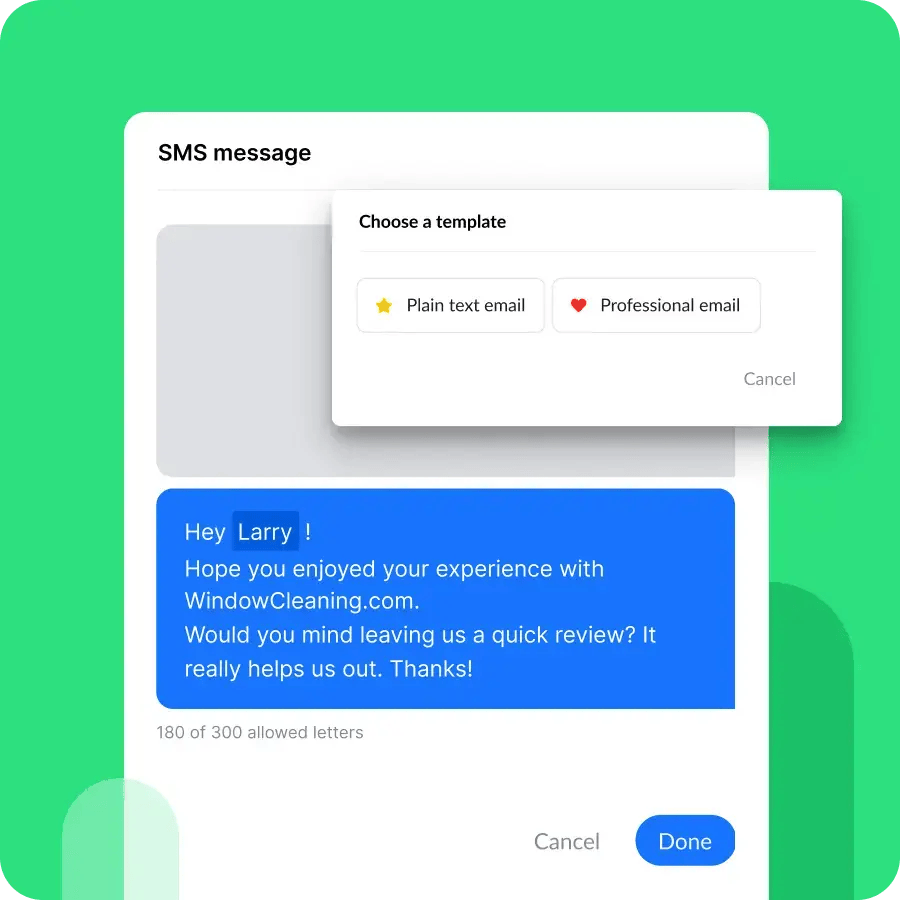
Frequently Asked Questions
What is reputation management for small businesses?
Reputation management for small businesses is the practice of actively shaping how your business appears to potential customers across every platform where they might look you up—Google, Facebook, industry directories, and increasingly, AI search tools like ChatGPT and Google AI Mode. For a small service business, it comes down to four things: generating reviews consistently, responding to reviews promptly, maintaining accurate business information across platforms, and monitoring your online presence so nothing slips through unaddressed. The goal is consistency. Businesses that manage their reputation systematically outperform those that treat it as a one-time project, regardless of the size of their marketing budget.
How much does reputation management cost for a small business?
It depends on what you need. NiceJob’s reputation management software for small service businesses starts at around $75/month, which covers automated review collection, SMS and email campaigns, and integration with field service management tools. Enterprise platforms like Birdeye and Podium start at several hundred dollars per month and are designed for multi-location businesses with dedicated marketing staff. For most small service businesses, the $75/month tier delivers everything needed to build and maintain a strong online reputation without requiring ongoing management time.
Do small businesses really need reputation management software, or can I do it manually?
You can manage your reputation manually. But in practice, most businesses that try don't do it consistently. Manually sending review requests means someone on your team has to remember to do it after every job, track who has and hasn't responded, follow up at the right intervals, and publish positive reviews to your website. For a busy service business running multiple jobs a day, that process breaks down quickly. The value of reputation management software is the consistency it creates. A business that automatically asks every customer for a review at the right moment will always outpace one that asks occasionally when someone remembers. For most small service businesses, the time saved and reviews generated make the investment straightforward to justify.
How does reputation management affect AI search results?
Significantly, and increasingly so. When someone asks ChatGPT, Google AI Mode, or Perplexity to recommend a plumber, HVAC technician, or landscaping company in their area, the AI synthesizes information from reviews, directories, and online mentions to form its answer. Businesses with stronger review signals (more reviews, more recent, across more platforms) are more likely to be recommended. This means reputation management now serves two functions simultaneously: it improves your visibility in traditional local search results, and it improves your likelihood of being recommended in AI-generated answers. The two are increasingly connected. Businesses that build consistent review volume today are building AI visibility for tomorrow.