

If you’ve ever felt tempted to “speed up” your reputation with purchased reviews, friend-and-family boosts, or incentives for 5-star ratings…you’re not alone.
But here’s the problem: platforms and regulators are taking fake reviews more seriously than ever. The short-term lift can turn into review removals, ranking drops, warning labels—or losing your profile entirely.
This guide breaks down what counts as a fake review, how businesses get flagged, what “banned” can look like on major platforms, and the safer (better) way to grow a reputation that actually converts.
What Counts As a “Fake Review” (Even if it Feels Harmless)
Most business owners think fake reviews means “a bot wrote it.” In reality, platforms treat a lot of common tactics as manipulation.
Examples that can get you in trouble:
- Buying reviews (or “review packages”)
- Incentivizing reviews with discounts, freebies, gift cards, giveaways, or “enter to win” offers
- Only asking happy customers to review (aka review gating) and steering unhappy customers somewhere private
- Having employees, friends, or family post reviews without disclosing their connection (or at all)
- Pressuring customers to change/remove a negative review in exchange for compensation
- Posting from multiple accounts to inflate ratings
Google’s policy is especially direct: fake engagement is not allowed and will be removed, including incentivized reviews and attempts to selectively solicit only positive reviews.
And the FTC's rule explicitly targets fake/false reviews, insider reviews without proper disclosure, and incentives conditioned on sentiment (e.g., “leave us a 5-star review and get $10 off”).
Want a review strategy that’s compliant and fast?
Set up NiceJob in two clicks to automatically request reviews by SMS + email and earn 4x more reviews.
Get Started
How Fake Reviews Can Get You “Banned”
“Banned” doesn’t always mean a dramatic email that says “You are banned forever.” It often happens in steps and it hurts long before it’s final.
Common platform consequences:
- Reviews removed (sometimes in batches)
- Review posting disabled for your listing (temporarily)
- Ranking suppression (you fall in map/local results or platform search)
- Warning labels / consumer alerts placed on your profile
- Account/listing suspension (your profile disappears from search/maps)
.png?width=600&height=412&name=Jan%2016%2c%202026%2c%2004_04_08%20PM%20(1).png)
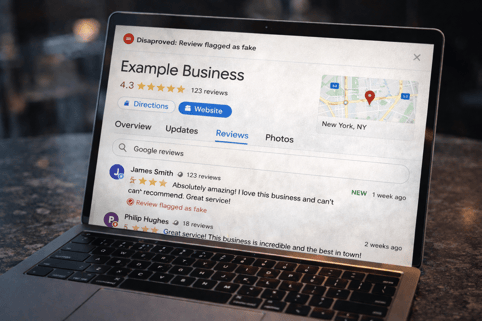
Google publicly frames fake engagement as removable content. And regulators have pushed for stronger enforcement: In the U.S., the FTC's Consumer Reviews and Testimonials Rule bans fake/paid reviews, undisclosed insider reviews, review suppression, and review hijacking—with civil penalties for knowing violations.
Why Platforms Are So Aggressive About This Now
Because reviews impact real money.
When reviews are manipulated, platforms lose trust and consumers get burned. That’s why:
- Google prohibits incentivized reviews and selective review solicitation.
- The FTC’s Consumer Reviews and Testimonials Rule (effective October 21, 2024) gives the FTC more ability to seek civil penalties for knowing violations.
Bottom line: fake reviews aren’t just “risky marketing.” In many cases, they’re a compliance risk.
What are the “Fake Review” Red Flags
Platforms don’t need to read your mind. They look for patterns.
Signals that often trigger audits or filters:
- A sudden spike of reviews in a short window (especially from new accounts)
- Similar wording across reviews (“great service!! highly recommend!!” repeated)
- Reviews coming from the same location/device patterns
- Reviews that mention incentives (“they gave me a discount to write this”)
- A mismatch between customer volume and review velocity over time
- Multiple reviews from people connected to the business (employees/family/friends)
You might not control how platforms detect it, but you do control whether your review strategy looks natural and policy-compliant.
What to Do Instead (the Safe Way to Grow Reviews Fast)
The good news: you can still grow reviews consistently without incentives, gating, or shady shortcuts.
1) Ask Every Customer (Not Just the Happiest Ones)
Selective review solicitation is exactly what gets businesses into trouble. A simple rule: make your ask universal. Same moment, same message, same process.
2) Make it Frictionless
Customers leave reviews when it’s easy.
- Send the request via text/email
- Link directly to the review page
- Ask right after the job is completed (when the experience is fresh)
3) Don’t Pay for Reviews, Improve the Experience
If you feel like you “need” incentives to get reviews, that’s a signal to tighten the experience:
- faster follow-ups
- clearer communication
- better expectation-setting
- smoother handoff at job completion
4) Collect Private Feedback Separately (Without Gating)
You can absolutely gather private feedback, but don’t use it as a filter to decide who gets the review link.
That’s the definition of review gating.
Instead:
- Send your review request to everyone
- Separately run a feedback campaign for service improvement
5) Respond to Reviews (Especially Negative Ones)
A calm, professional reply does two things:
- Shows future customers you’re accountable
- Often de-escalates the reviewer privately
(And yes, many unhappy customers will update their review after a good resolution, without you ever asking.)
Responding to reviews can also turn a bad moment into a trust-builder. Many unhappy customers update their review after a good resolution (without you ever asking). If you want a simple playbook, check out our blog on why you shouldn't feat negative reviews.
How to Do Damage Control (If You’ve Used Fake Reviews in the Past)
If you’re worried you crossed the line, the best move is to clean it up proactively.
A practical recovery checklist:
- Stop all incentives and “5-star only” language immediately (even in scripts).
- Audit your recent review activity: timing spikes, repeated text, reviewer profiles.
- Remove what you can control (e.g., website testimonials that came from undisclosed insiders).
- Document your new compliant process (in case a platform or regulator asks).
- Rebuild with a consistent, automated review workflow for the next 60–90 days.
The fastest way to recover trust isn’t arguing with the system, it’s showing a clean, steady pattern of genuine reviews. If you’re rebuilding trust, measure it as you go. NiceJob keeps reviews coming in with a consistent workflow, and Insights lets you track review volume, rating trends, sources, and campaign results so you can prove momentum over time.
How NiceJob Helps You Grow Reviews Without Cutting Corners
If the risky stuff starts when you’re busy (and forget to ask), the fix is simple: automation that makes the honest path the easiest path.
NiceJob helps you:
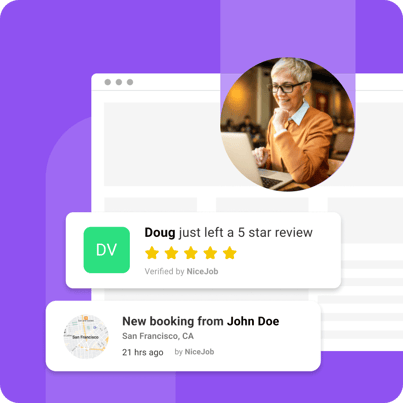
- automatically request reviews after a completed job
- keep your review velocity steady (so it looks natural)
- build social proof you can reuse across your site and marketing
No incentives. No gating. Just a consistent system that earns reviews the right way.
Conclusion: Real Reviews Win (and They’re Safer)
Fake reviews can feel like a shortcut, but the downside is brutal: removed reviews, suppressed rankings, consumer alerts, and even legal exposure.
The better strategy is the one you can run forever:
- ask everyone
- make it easy
- automate the timing
- improve from feedback
That’s how you build a reputation that doesn’t just look good—it holds up.
Want a safer way to earn more reviews on autopilot?
Set up an automated review request flow with NiceJob that’s compliant, consistent, and built for long-term growth.
Learn More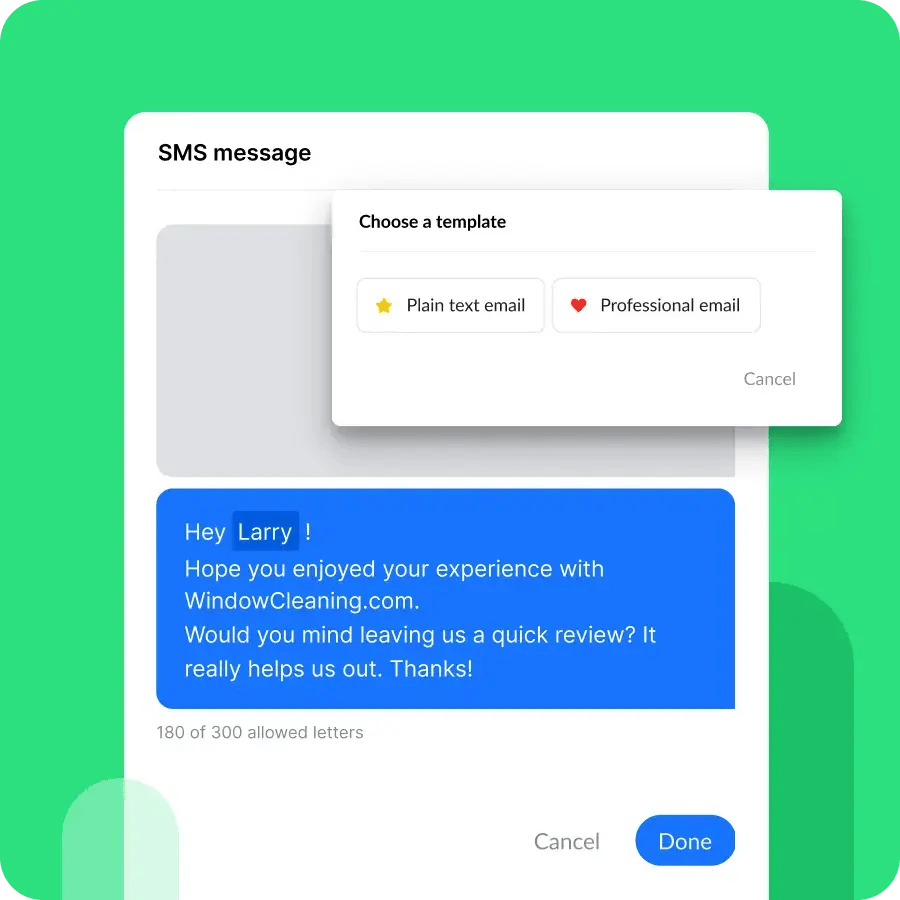


-1.png)
.png)