

Most businesses treat reputation like it’s strictly a marketing problem where one has to: get more reviews, respond faster, post more social proof.
But your reputation is built before the review request ever lands. It’s built in the way your team shows up, communicates, follows through, and resolves issues. In other words: team management isn’t a back-office function, it’s a front-line reputation strategy.
Reputation is the “Output.” Team Execution is the “Input.”
A customer doesn’t leave a 5-star review because your business asked nicely.
They leave it because their experience had a few consistent aspects:
- the job was completed cleanly and on time
- expectations were set clearly
- communication felt professional
- any hiccups were handled quickly
- the customer felt respected
Those are team behaviors. And they’re controllable.
When your workflows are consistent, your reputation becomes consistent.
When your workflows are chaotic, your reviews look chaotic too, with spikes, gaps, and the occasional “they never called me back” that stings more than it should.
Here’s how to think about team operations as a direct input to star ratings, word-of-mouth, and the steady flow of fresh reviews, and how NiceJob helps you turn great service into visible proof.
1) Better Onboarding = Fewer Avoidable Bad Reviews
Strong onboarding reduces the errors that lead to the most common negative review themes like: communication, punctuality, and follow-through.
That’s why tools that streamline people operations matter. For example, platforms like Gusto sit upstream of service delivery—helping businesses manage hiring, onboarding, and employee administration in a structured way. Even though customers never see your HR system, they feel the results in how prepared and consistent your team is.
Pro Tip: NiceJob Pro’s Insights function can give you insights into review sentiment and recurring themes. If you regularly see phrases like “never confirmed” or “slow follow up”, you’ll have a better sense of where you might want to enhance your team’s training.
Run a “Review Audit” on your business
Turn customer reviews into a clear improvement plan. Use the Great Review Audit framework to spot patterns, fix friction points, and double down on what customers already love.
Read More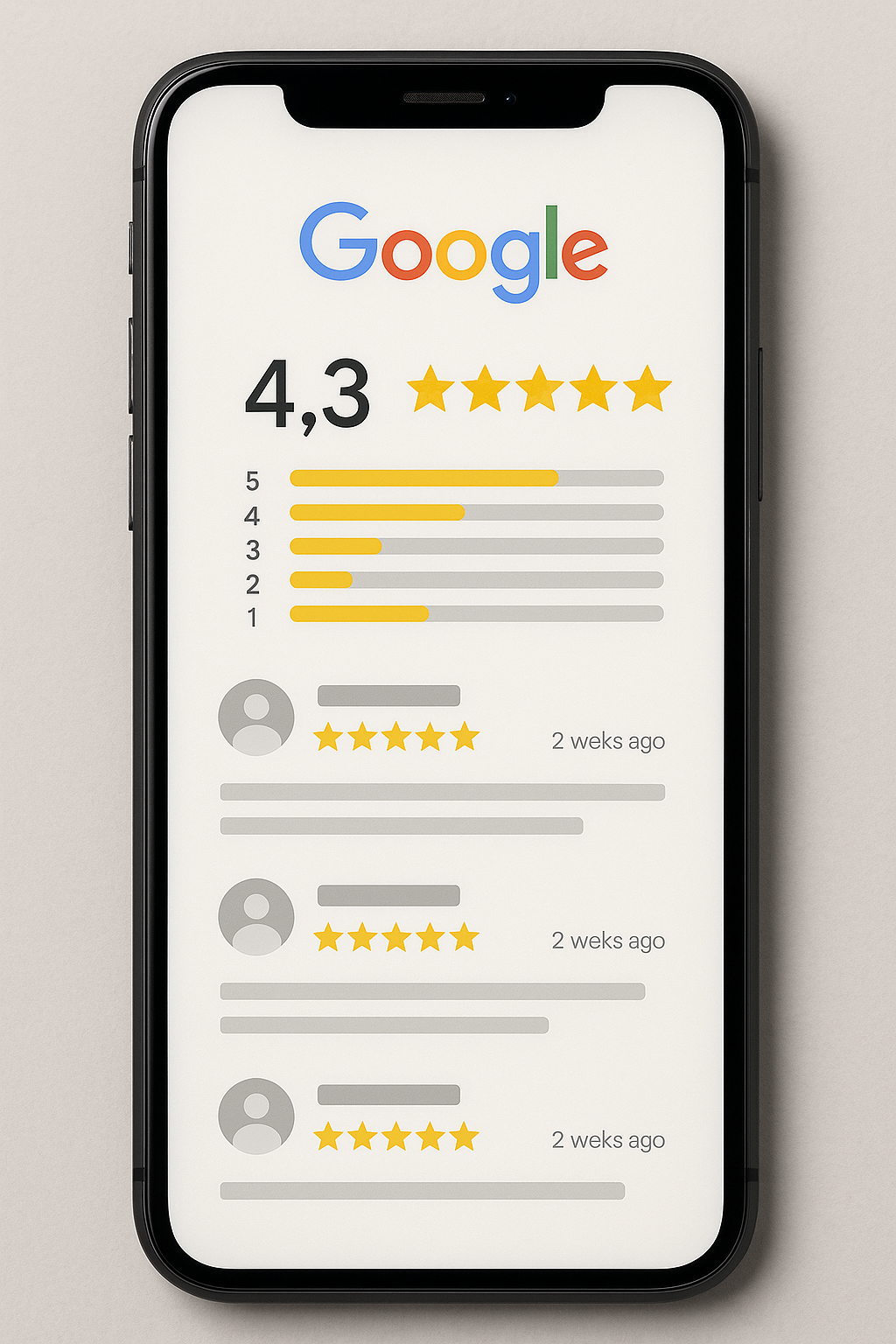
2) “Job Done” Has to Mean the Same Thing Every Time
Review timing works best when “done” means the same thing every time. If it’s subjective, customers are likely to get asked at the wrong moment. For example, like after the first visit on a two-visit paint job, or right after completion when payment or a final sign-off is still outstanding.
This is where operational discipline pays off:
- Define what “complete” means
- Close the job properly
- Confirm satisfaction
- Then trigger the next step
NiceJob is built to automate what happens after that completion point, so customers get invited at the right moment, consistently, without your team having to remember. And if you’re connecting systems outside of a direct integration, NiceJob supports automation via Zapier and webhooks.
Stop guessing and use the Review-Boosting SOP
Get a simple step-by-step process to send invites at the right time and keep reviews coming in consistently.
Learn More
3) Accountability Creates Repeatable Excellence (and Measurable Proof)
Your best teams aren’t just “nice.” They’re accountable, and accountability is what turns a great day into a consistent standard:
- They follow the process (same quality, every job)
- They communicate early (before the customer gets anxious)
- They own outcomes (fixes, follow-ups, and “we’ll make it right” moments)
The problem is that accountability doesn’t scale when the process lives in your best tech’s head, or across scattered texts and notes.
It becomes scalable when performance is visible and there’s a feedback loop: you can see what’s working and what’s not, and then turn the best approach into a standard the whole team follows.
Use Real Data to Identify Trends and Gaps
NiceJob gives you a practical way to connect customer feedback to performance, so you can coach what matters and reinforce what works:
- Attribute reviews to team members so feedback isn’t anonymous and becomes actionable. (This can be done manually, and some integrations can automatically tie reviews to assigned staff depending on the system.)
- Use Insights to spot patterns in what customers praise (or complain about): communication, punctuality, cleanliness, professionalism, etc., so you can fix the actual friction points that drive ratings.
- Leaderboards/employee views help you see trends over time, not just one-off wins, like who consistently earns strong feedback, and where coaching is needed.
What this looks like operationally:
Accountability isn’t “who got the most reviews.” It’s turning feedback into a repeatable playbook:
- Turn praise into standards: If your best reviews consistently mention “kept me updated,” that becomes a required behavior (e.g., arrival text + mid-job update + completion recap).
- Turn complaints into training: If lower ratings cluster around “late/no updates” or “messy closeout,” you don’t need motivation, you need a tighter checklist and coaching.
- Recognize what you want repeated: Highlight specific behaviors (“proactive updates,” “clean walkthrough,” “explained next steps”) so the team learns what “excellent” looks like in customer language.
This doesn’t turn service into a contest. It turns service into a standard, because when the behaviors that earn trust are visible and reinforced, they get repeated.
Make reputation measurable at the team level
Attribute reviews to team members and use Insights to reinforce what earns trust.
Learn More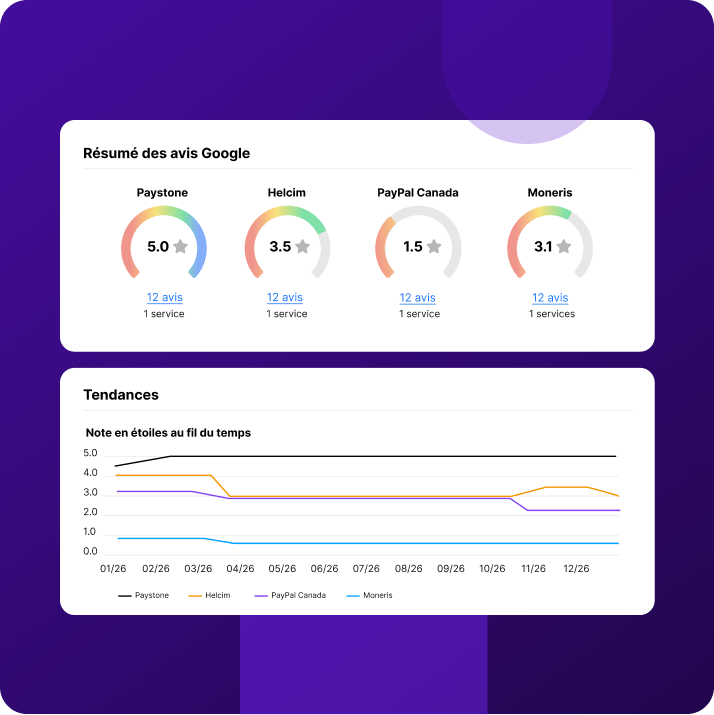
4) Recognition is a Retention Strategy (and Retention Protects Reputation)
Recognition helps you keep great people. And stable teams deliver stable experiences.
Whereas high turnover risks quietly wrecking your business’ reputation:
- new faces every visit = less trust and customer rapport
- inconsistent service quality
- miscommunications
A few simple tips to create a culture that supports retention:
- Highlight “review wins” in team huddles
- Share customer stories internally
- Give shout-outs tied to specific behaviors (“great expectation-setting,” “fast resolution,” “clean finish”)
NiceJob makes it easy to surface the moments worth celebrating, because the reviews are already flowing into one place, ready to share and learn from.
Protect your reputation before the first job
Description: Automate review requests after each completed job so great work turns into visible trust.
Learn More
5) Systems Beat Heroics: Automate What Shouldn’t Rely on Memory
A common reputation trap is depending on a few “rockstar” employees to carry quality. They’re the ones who naturally communicate well, remember to ask for reviews, calm down tense customers, and leave every job feeling buttoned-up.
The Risk of the “Rockstar” Trap
When your growth depends on heroics, you inherit a few predictable problems:
- Inconsistency becomes your brand. Some customers get the “premium” experience, others get the “fine” experience, and your reviews end up reflecting that.
- You can’t scale what you can’t repeat. New hires don’t magically copy your best people, so quality drops as you grow.
- Burnout and turnover hit harder. Rockstar employees get overloaded, then leave, taking your standards (and your review velocity) with them.
- You miss the perfect moments. Even the best teams forget follow-ups when the schedule is slammed. Review asks go out late or not at all, and that “happy peak” disappears.
The fix isn’t “find more rockstars.” It’s to extract what your best people do naturally and turn it into defaults, so the average day produces great outcomes.
How to Systematize What Your Star Players Do Best
Think of your top performers as your “process designers.” Listen to what customers praise in their reviews, then convert those behaviors into simple repeatable steps:
- If reviews keep saying “kept me updated,” define the minimum communication cadence (arrival message + quick update if delayed + completion recap).
- If customers say “made it easy,” standardize closeout (photos/notes, clear invoice, next steps).
- If customers say “professional,” bake professionalism into checklists (uniform, walkthrough, clean-up, confirmation).
Then automate the parts that shouldn’t rely on memory. Especially the stuff that happens after a great job, when teams are already moving on to the next one.
That means automating the repeatable parts:
- the invite timing
- the follow-ups
- the consistent touchpoints that keep customers engaged after the job
NiceJob campaigns are designed for exactly this: turning great service into a steady stream of social proof without burdening your staff with extra admin.
All Good Things Start with a Strong Foundation
Before you talk about getting more reviews, more repeats, or a stronger reputation, zoom out.
A business earns trust long before the customer ever sees a 5-star review on Google. Trust starts with how your team shows up: punctual, prepared, consistent, and professional. And that doesn’t happen by accident.
Because here’s the truth: you can’t expect your team to deliver the cleanest, smoothest, most organized customer experience if your back-of-house system is a mess.
If hiring is rushed, onboarding is inconsistent, expectations live “in someone’s head,” and accountability is reactive, you’ll feel it in the field. And your customers will feel it too, through delays, miscommunication, sloppy handoffs, and uneven service.
First impressions matter, but so do the thousand small moments that follow. You’re setting the standard and culture for performance right from the interview and onboarding stage.
Tools like NiceJob help you capture and showcase trust after service. But the most resilient businesses also protect trust before service—by building a people system that makes great performance repeatable.
How Gusto Fits In
If NiceJob helps you capture and showcase trust after service, people-ops tools like Gusto help you protect trust before service.
Gusto supports the operational basics that keep teams consistent, like structured onboarding, organized team administration, and integrations that connect people processes into broader workflows (so you don’t manage your team through scattered texts, spreadsheets, and memory).
This isn’t “HR for the sake of HR.” It’s about preventing the silent operational drift that eventually shows up as:
- missed steps,
- inconsistent customer experiences,
- and avoidable reputation damage.
In practice, the strongest operations tend to look like this:
- Team processes are standardized: hiring → onboarding → expectations → accountability
- Work completion is clearly defined: what “done” means, how it’s documented, and how issues get escalated
- Customer experience is consistent: communication cadence, professionalism, clean closeout
- NiceJob turns that consistency into visible proof: reviews, stories, referrals, and sustained reputation growth
The point we’re pulling back to:
Reputation isn’t just marketing. It’s the public result of how consistently your systems produce a great customer experience—starting with the way you hire, onboard, and manage your team.
Conclusion
Reputation isn’t something you “do” after the job. It’s something you build into the way that your team works.
When your team is trained well, managed clearly, and supported by systems that reduce mistakes, customers feel the difference—and they say it publicly. NiceJob makes that outcome predictable by automating review generation and keeping your proof of trust flowing steadily, while operational tools like Gusto help ensure the people delivering the experience are set up to succeed, right from day one.
Want more reviews without more admin?
See how automated review invites (sent at the right “job done” moment) keep your reputation growing without extra follow-ups.
Start Free
.jpg)


.jpg)
.png)