
•
Blog

Running a pest control company means competing in one of the most crowded local service markets around. There are over 34,000 pest control businesses operating in the United States, with the industry expected to reach $29.7 billion in 2026. Most of those businesses are local operators serving one metro area, competing for the same homeowners searching Google at 9pm after spotting something they wish they hadn't.
The operators pulling ahead right now are not necessarily outspending everyone. A lot of them are simply doing the reputation and visibility work their competitors are skipping: reviews are not getting collected consistently, Google Business Profiles are not being updated, and referrals are happening by accident instead of by design.
That is the opportunity. And most of it does not require a big ad budget.
Here are 10 pest control marketing ideas built around how customers actually find and choose businesses in 2026.
1. Optimize Your Google Business Profile
When someone searches "pest control near me" or "bed bug exterminator [your city]," the first thing they see is the local pack: three businesses with star ratings, review counts, and a map. Getting into that pack, and ranking well once you're there, is the single most important thing most pest control operators can do for their marketing.
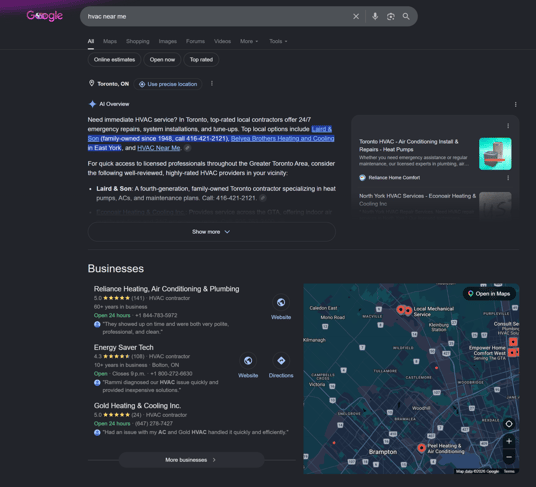
Review signals account for 16 to 20% of local pack ranking weight, according to Whitespark's 2026 Local Search Ranking Factors report, which surveys roughly 50 local SEO experts annually.
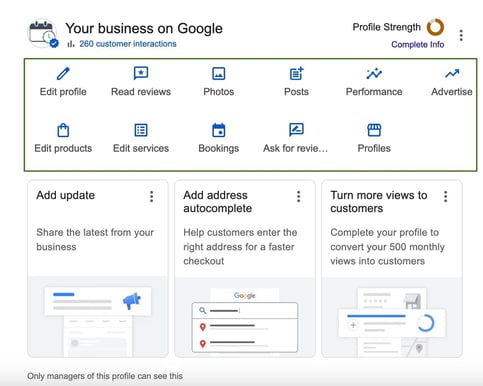
Most pest control businesses set up a Google Business Profile once and treat it like a checkbox. The ones ranking well are doing something different: adding new photos of jobs and technicians on a regular basis, keeping their service list current through seasonal changes, or using the Q&A section to answer common questions before customers even have to ask them.
If you have not looked at your Google Business Profile in the past 60 days, it needs attention before anything else on this list will have the effect you want. See our complete guide to Google Business Profile optimization for everything that belongs on a fully built-out profile.
2. Build Review Velocity, Not Just Review Count
A pest control company with 200 reviews and a 4.8-star average routinely beats a competitor sitting on 900 reviews at a 3.9. This is true in local pack rankings, in Local Service Ads (LSA) placement, and in the split-second gut check a homeowner does before deciding who to call.
What matters almost as much as your average rating is review velocity or how consistently new reviews are coming in. A profile that earned 30 reviews two years ago and has been quiet since looks like a business that is not busy, and Google treats it that way too.
The problem is most customers do not leave reviews unprompted. They had a fine experience, they moved on, and they forgot about it. The solution is a review request system that asks at the right moment right after a job closes, while the experience is still fresh and without making your technicians responsible for following up manually.
NiceJob's automated review campaigns handle this in the background across every job, without anyone on your team having to think about it. And when the reviews come in, AI Replies generates personalized responses to each one so nothing goes unanswered.
If you want the full picture of how reviews connect to local rankings, this breakdown on SEO and reputation management is worth the read.
3. Set Up Google Local Services Ads
Google Local Services Ads appear above both paid search ads and organic results for high-intent queries like: "pest control near me," "rodent exterminator [city]," "bed bug treatment cost." Customers clicking those listings are ready to book, not just browsing.
LSA leads convert at 30 to 40% or higher, compared to 5 to 20% for traditional PPC (pay-per-click advertising, where you pay for every click whether or not it turns into a call), which makes the math on cost per booked job look a lot better than raw cost-per-click figures suggest.
There is something important to know about how LSAs changed in late 2025. In October 2025, Google discontinued the "Google Guaranteed" badge and its associated customer money-back guarantee. The badge is now called "Google Verified," and your Google Business Profile review score and review volume are the sole trust signals customers see on your listing. Before that change, a mediocre operator could lean on the guarantee badge to compensate for a thin review profile. That is no longer the case.
Four factors determine LSA visibility: response speed, review velocity and quality, lead acceptance rate, and profile completeness. Speed is the one operators most often underestimate. A lead that does not get a call back within the first few minutes is a lead that called someone else. Build a call protocol for your team and treat every LSA inquiry like it is time-sensitive, because it is.
4. Run Seasonal Campaigns Before the Season Hits
Pest control has predictable demand cycles. Mosquito and tick calls spike in spring and summer. Rodent and cockroach calls go up in fall when the weather drops and pests move indoors, and termite swarms happen in predictable windows depending on your region.
Most operators respond to those patterns after the phones start ringing. The ones who fill their schedule fastest are marketing a few weeks ahead of the curve.
A late-February or early-March campaign positioning your business as the smart call before mosquito season starts will book customers who would otherwise have waited until they were already dealing with a problem. An early-September rodent campaign involving a checklist of ways to keep mice out this winter, paired with a discounted inspection offer captures homeowners before they have something to panic about.
Think in terms of two main seasonal pushes:
Spring and summer: Mosquitoes, ticks, ants, stinging insects.
Lead with prevention messaging. A first-treatment discount or free inspection offer works well for converting curious homeowners into paying customers. This is also your best window to sell recurring service plans.
Fall and winter: Rodents, cockroaches, overwintering pests.
Lead with urgency and protection messaging. "Don't wait until you hear something in the walls" is more compelling than a generic pest control ad.
Email campaigns, a single well-targeted Meta ad, and seasonal posts on your Google Business Profile can all pull weight here without a large budget.
5. Understand How AI Search Is Changing Who Gets Called
This one is newer, and most pest control operators are not paying attention to it yet.
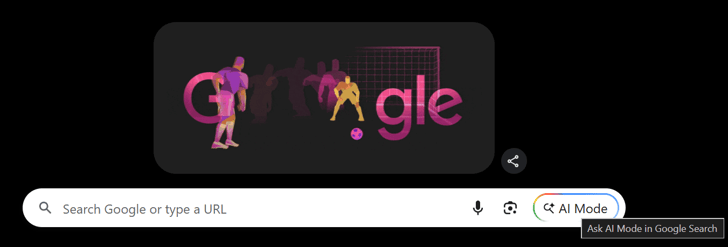
A growing number of homeowners are starting their search for local services using AI tools: Google's AI Overviews, ChatGPT, Perplexity. They type a question, get an answer with a business recommendation, and call whoever showed up in that answer. A 2026 study analyzed 500 pest control businesses across more than 100 US cities and found that fewer than half of top-rated companies appeared in ChatGPT when consumers used it to search for local pest control services.
That is a real visibility gap, and it will only grow.
According to Local Falcon's 2025 whitepaper, 40.2% of all Google search queries trigger AI Overviews. For local queries like "pest control near me," that rate is lower at 7.9%, but for informational searches like "how do I know if I have termites," or "what kills bed bugs permanently", AI Overviews appear regularly. The business cited in that AI answer gets a credibility head start before the homeowner has even visited a website.
Seer Interactive's 2025 research found that when a brand is cited within an AI Overview, it earns 35% higher organic click-through rates compared to queries where AI Overviews appear but the brand is not cited.
There is no separate strategy for getting cited by AI tools. It comes down to the same work: a strong, complete Google Business Profile, a healthy volume of authentic reviews, and authoritative content on your website that answers the questions pest control customers actually ask. Google's AI draws from the same signals its traditional ranking algorithm uses.
6. Automate Your Referral Program
Word-of-mouth has always driven pest control bookings. A homeowner who had a great experience with your company will mention you when a neighbor asks for a recommendation. In neighborhoods where one rodent problem often means others are close by, this kind of referral has real compounding value.
The issue is that it mostly happens by accident. Your best customers will recommend you when the right conversation comes up. A referral program makes that happen more often and more reliably.
Triggered after a completed job, an automated referral request asks your best customers to share your business with people they know. Keep the ask simple: a short message, a clear incentive, and one easy step. A 20% discount on their next service or a small gift card for a successful referral is enough to move the needle.
NiceJob Pro's automated referral tools are built for exactly this workflow, with no manual outreach required, no one on your team needs to track who referred who. It runs in the background across every completed job. You can read more about how referrals work here.
7. Show the Work You Do
Pest control has a marketing problem most trades do not. The work is often invisible. A freshly treated home looks exactly the same as an untreated one. There is no before-and-after photo of a cleared foundation the way there is for a new roof or a landscaped yard.
This is precisely why showing the work matters so much. Photos of infestations before treatment, documentation of the treatment process, a quick video walkthrough from a technician explaining what was found and how it was handled. This kind of content builds trust in a way that a stock photo of a smiling technician in a polo shirt simply does not.
Post job photos to your Google Business Profile consistently. If a technician found something notable on a job, take a photo (with the customer's permission) and add it to your profile. Share short educational videos on your social channels explaining what customers should look for in different seasons.
The customers making hiring decisions on Google are looking for signals that your business is real, active, and good at the work. Visual job documentation is the fastest way to give them that.
8. Use Email to Stay Top of Mind Between Jobs
The pest control operators who hold on to customers longest are the ones customers think about before they have a problem. Not just after something goes wrong.
A short quarterly email covering seasonal prevention tips for your area costs almost nothing to produce and keeps your business name in front of customers who might otherwise forget you exist between annual visits. Someone who reads your "how to rodent-proof your garage before winter" email in October is far more likely to book a preventive service than someone who only hears from you when they have already noticed an issue.
This kind of content also works in multiple channels: A short blog post on your website, a social post with a tip, or a brief note in a post-visit text. The goal is consistent presence, not volume.
Pair this with NiceJob Pro’s Get Repeats feature, which automates rebooking reminders for customers who are due for a recurring visit. Keeping an existing customer is significantly cheaper than acquiring a new one, and most pest control businesses are leaving repeat revenue on the table by not having a system for it.
9. Respond to Every Review
Most pest control businesses respond to negative reviews and ignore positive ones, which is understandable since negative reviews feel urgent, while positive ones feel like they can wait. Though this sort of approach costs you on both ends.
Responding to every review, positive and negative, signals to Google that your business is active and engaged. It signals to customers researching you that you take service seriously. And for negative reviews, your response is often more persuasive than the review itself. A calm, professional response to a complaint tells a prospective customer more about how your business operates than ten five-star reviews do.
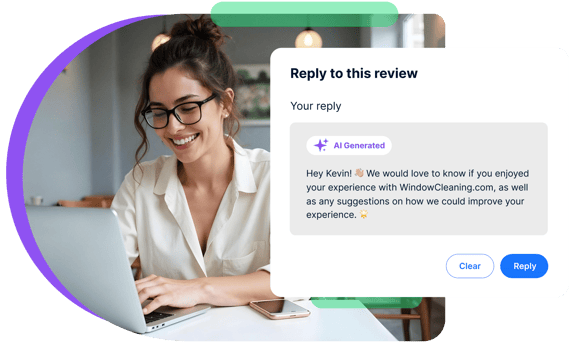
The practical barrier is time. Responding to 20 or 30 reviews a month across Google and elsewhere, individually and thoughtfully, is genuinely tedious when done manually. NiceJob Pro’s AI Replies tool generates personalized responses at scale; that doesn’t mean templated copy-paste answers, it means responses that match the tone of the review and sound like a real person wrote them.
10. Make Your Website Work for Local Search
Your Google Business Profile drives a lot of direct calls, but your website is where customers go to verify that you are legitimate before booking. A slow site, a homepage with no mention of your service area, or a contact form that is hard to find are all reasons a customer closes the tab and calls the next result.
For pest control, local SEO on your website means a few specific things:
- Service area pages for each city or region you cover, with actual content rather than duplicated templates
- Schema markup that tells Google your business type, location, and service categories
- Fast mobile load times since most pest control searches happen on phones
- Clear calls to action that make it easy to call or submit a request in as few taps as possible
Your website and your Google Business Profile reinforce each other. A well-optimized website behind a strong GBP profile is what gets you into the top three local results. It is also what determines whether AI search tools have enough information about your business to cite you confidently.
For a broader look at pest control marketing strategy beyond this list, see How to Market Your Pest Control Business.
The Thing All of These Have in Common
Every one of these ideas works because it builds trust. Reviews, referrals, seasonal content, visual documentation, responsive profiles are all part of what makes it easier for a homeowner to feel confident choosing you before they ever talk to anyone on your team.
The pest control companies growing fastest right now are not the ones with the biggest ad budgets. They’re the ones making it easy for happy customers to do the marketing for them.
Start getting more reviews
NiceJob automates review requests after every job so your profile stays active and your rankings keep climbing.
Get Started.webp)