•
Blog

You can be the best electrician in your city and still lose jobs to a competitor with half your skill and twice your Google reviews. It happens more than most people in the trades want to admit.
The local pack, that map block at the top of Google search results, captures most high-intent clicks before anyone scrolls further. That means a few electricians get the bulk of the calls, and everyone else splits what's left. If you're not in that box, the quality of your work doesn't matter to the homeowner who never sees your name.
Getting there doesn't require a big ad budget. It requires a few systems that run reliably, and a clear-eyed view of what Google is actually rewarding right now. This guide covers 10 strategies, ordered by leverage, each with a specific action you can take this week.
Why Most Electrician Marketing Advice Doesn't Work
Most guides on electrician advertising are recycling tactics from 2019: build a website, run Google Ads, post on Facebook. None of that is wrong, it just isn't what's moving rankings in 2026.
Google's local algorithm has shifted. A 2026 Local Search Ranking Factors report found that review signals now account for roughly 16% of local pack ranking weight. That's the single biggest lever electricians have, and almost none of them are pulling it deliberately. Most ask for reviews occasionally, when they remember, and get a couple a month. That pace won't break into the top 3, and it won't hold a spot there.
The other issue with generic marketing advice is that it treats every channel as equally worth your time. For electricians, the local pack, your Google Business Profile (GBP), and word-of-mouth are where the actual booked jobs come from. Spending hours on Instagram Reels before those are locked down is a bad trade.
Strategy 1: Dominate Your Google Business Profile and Local Pack
When someone searches for a flooring business near them, Google surfaces what's called the local pack: a map with three highlighted local businesses, right at the top of the results page. Three spots is all that it holds. If your Google Business Profile isn't fully built out, you're not just ranking below the top 3, you're effectively invisible to most homeowners doing a quick search before calling someone.
Log into your GBP this week and work through this checklist:
- Business name matches your license and website exactly. No keyword stuffing. Google can suspend your listing for it.
- Primary category is "Electrician," not "Electrical Engineer" or "Home Services." Add secondary categories for EV charger installation, panel replacement, or your other specialties.
- Service area covers every city, town, and neighborhood you actually work in, not just where your office is.
- At least 10 photos uploaded: your truck, your team, job shots, before and after showcases.
- Business description leads with your service area and what you specialize in, not a slogan.
- You're posting at least monthly. A job photo with a short description of the work is enough.

Think of your profile as the foundation. If it's incomplete, the rest of this guide can only do so much. Once it's in good shape, the next strategy is the one that most directly controls your local pack position.
Strategy 2: Build a Review Engine (This Is the #1 Ranking Factor)
A survey of 400 homeowners found that 91% consider reviews important when choosing a contractor. For an electrician, that means reviews aren't just a rankings lever; they're the first filter a potential customer runs you through before they ever pick up the phone. And most electricians are leaving that filter to chance.
Leaving it to chance looks like this: you ask a satisfied customer if they'd mind leaving a review, and sometimes they do, getting you a couple a month. That's not a system.
A system looks different: every completed job automatically triggers a review request, without anyone on your team having to remember. Timing matters here. Requests sent within 24 hours of job completion convert at a much higher rate than ones sent days later, when the customer has mentally moved on.
Why Reviews Matter More than Almost Anything Else
Google uses three signals to decide who appears in the local pack: relevance, distance, and prominence. Prominence is the one factor you can directly control, and reviews are its most powerful driver.
Two specific things carry the most weight. A business with 200 reviews averaging 4.8 stars will consistently outrank one with 20 reviews at a perfect 5.0 in the same service area. And recency matters just as much: Google weights recent reviews more heavily than old ones, so a business collecting one or two reviews per week will outrank one that collected 50 reviews two years ago and hasn't had a new one since.
The practical result: electrical contractors in the local pack receive three to four times more leads than those ranked below it. That's not a marginal advantage. That's the difference between a full schedule and a slow week.
There's also a trust dimension that works independently of rankings. When a homeowner's power goes out at 9 PM, they're not asking a neighbor for a recommendation. They're opening Google, scanning the local pack, and calling the electrician with the most reviews and the highest rating. That decision takes about 30 seconds. Fifteen years of experience doesn't show up in those 30 seconds. Your review count does.
What a Review Engine Looks Like
Most electricians ask for reviews occasionally, when they remember, usually after a job that went especially well. That's not a system. A review engine is a repeatable process that runs after every completed job, not just the memorable ones.
The basic version looks like this: when a job closes, an automated text goes out to the customer within a couple of hours. The message is short, personal-feeling, and links directly to your Google review page. Not your Google Business Profile homepage where the customer has to find the review tab. A direct link that opens the review box immediately can double your conversion rate just by removing friction.
If the first message doesn't get a response, one follow-up two to three days later is appropriate and expected. After that, leave it alone.
If you have technicians in the field, they're a key part of this system. A simple mention at job wrap-up primes the customer before the automated text even arrives. Techs who understand that reviews directly affect call volume and job security tend to take that step seriously. Some shops tie a small bonus to reviews that mention a technician by name, which keeps the whole team invested.
Responding to reviews is also part of the engine, not optional housekeeping. Google's own documentation confirms that responding to reviews improves local search ranking. Every response adds fresh content to your Google Business Profile, increases engagement signals, and naturally incorporates keywords related to your services. A response to a review mentioning a panel upgrade that references the panel upgrade in your reply is adding keyword-relevant content to your profile without writing a single blog post.
What This Does to Your Business Over Time
An electrician starting the year ranked fifth or sixth for "electrician near me" searches can realistically move into the local pack within six months of consistent review velocity. The top three positions capture over 70% of clicks on that search result, while positions four through ten share the remaining 30%. Moving from sixth to second isn't a small optimization. It's a fundamentally different volume of inbound calls.
The goal isn't a number, it's a pace. An electrician generating 10 to 15 new reviews every month will outrank a competitor who collected 60 reviews in 2023 and stopped. Consistency is what Google rewards, because consistent reviews signal an active, trusted business, not a one-time burst of social proof.

Electricians using NiceJob for this have seen review volume increase up to 4x versus manual outreach. The platform sends a branded SMS or email the moment a job is marked complete, with a single-tap link to Google. No login, no friction. That last part matters more than it sounds since SMS review requests drive a 38% engagement rate compared to 27% for email, precisely because a single tap is all it takes.
This week: connect your field service management (FSM) software to NiceJob Reviews so review requests fire automatically when a job closes. If you're not using an FSM tool yet, you can trigger them manually from NiceJob's dashboard in under a minute per job.
Strategy 3: Get on Angi, HomeAdvisor, and Thumbtack, but Do It Strategically
These platforms can generate real work, but they're easy to overpay for. The trap is spending on leads while competing on price with every other electrician in the same marketplace. That erodes margins and trains homeowners to treat electrical work like a commodity.
The smarter play is to use these platforms as a reputation channel, not just a lead channel. Angi and Thumbtack both display reviews prominently. An electrician with 80 reviews and a 4.9 rating gets more inbound and commands higher prices than one with 12 reviews and nothing to differentiate them.
This week: claim your profiles on all three if you haven't already. Set a monthly budget you're comfortable treating as paid acquisition with a target cost-per-job. Fill out the photos, bio, and service descriptions completely. Then apply the same review automation from Strategy 2 to any jobs that come through these platforms. Every source should be feeding your review count.
Strategy 4: Referral Automation (Turn Every Job Into 2 More)
A referred customer is the best lead you can get. They already trust you before you show up, they're less likely to shop around on price, and they close faster. The research backs this up: customers acquired through referrals are four times more likely to make a purchase, spend 34% more on average, and have 16% higher lifetime value compared to customers from other channels. For an electrician where a single panel upgrade or rewire can run into the thousands, that difference compounds quickly.
The problem is that most electricians treat referrals as something that either happens or doesn't. A happy customer mentions you to a neighbor, or they don't. There's no ask, no timing, no system. So the jobs that should be generating more jobs just close and disappear.
What Referral Automation Actually Looks Like
Referral automation replaces hoping with a process. A few days after a job closes, the customer gets a short message thanking them for their business and making it easy to pass your name along, whether that's a discount on their next service call, a small gift card, or simply a direct link they can share. The incentive doesn't need to be elaborate. What matters is that the ask goes out consistently, while the job is still fresh in the customer's mind and the goodwill is still there.
Timing is everything here. A customer who just watched you restore power to their home at 9 PM on a Friday is far more likely to refer you than the same customer three weeks later when the moment has faded. An automated message sent within a few days of job completion captures that window without requiring you to remember to do it manually.
Referred customers are also nearly three times more likely to refer others themselves, which means the value of one referred customer can compound into several more over time. You're not just adding one job. You're potentially seeding a chain.
What This Does to Your Numbers
The math is straightforward. At 50 jobs a month, even a 10% referral rate adds five jobs a month, 60 a year, from a workflow that runs on its own. Unlike paid ads, where you pay for every lead regardless of whether they convert, referrals consistently produce some of the highest conversion rates of any lead source, because the trust is already built before the first phone call.
There's also a cost dimension worth considering. Paid search campaigns typically cost between $200 and $500 per acquired customer. Referral programs bring that down to $25 to $75 For a small electrical operation where margins matter, that's a meaningful difference in what each new job actually costs you to win.

Referral automation replaces hoping with a process. With NiceJob Pro, once a customer leaves a review, a referral invitation goes out automatically. They get a short message thanking them for their business and a direct link they can forward to anyone who needs an electrician. No manual follow-up, no remembering to ask, no awkward pitch at the end of a job. The ask goes out at the right moment every time, while the goodwill from a job well done is still fresh.
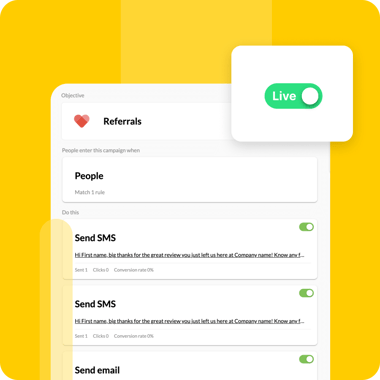
This week: Turn on referral campaigns in NiceJob Pro. Referral invitations go out automatically after a review is collected, so both workflows feed each other without any additional manual steps on your end.
Strategy 5: Neighborhood Targeting on Nextdoor and Facebook
Nextdoor gets overlooked because it doesn't feel like a marketing platform, though that's actually why it works. When a homeowner asks their neighborhood for an electrician recommendation, the people responding are their actual neighbors. People who've seen your truck on the street, maybe had you do work on their house, and can say something real. That kind of endorsement carries more weight than a paid ad.
You don't need to advertise on Nextdoor to benefit from it. Claim your free Business Page, respond when your business gets mentioned, and after jobs in a neighborhood, ask the homeowner to recommend you on the platform. A handful of genuine local endorsements can keep leads coming in for months at no cost.
On Facebook, skip the boosted posts. A targeted ad aimed at homeowners aged 30 to 65 within 15 miles of your service area, using a real job photo and a customer quote rather than stock imagery, can generate solid local awareness for around $200 a month. It's not the highest-ROI channel on this list, but it's worth running once the fundamentals are in place.
This week: claim your Nextdoor Business Page. It's free and takes 10 minutes.
Want to be the #1 choice in your community?
Learn how top electricians boost reviews, build credibility, and turn neighborhoods into loyal customer bases.
Learn More
Strategy 6: Before/After Photo Content on Google and Instagram
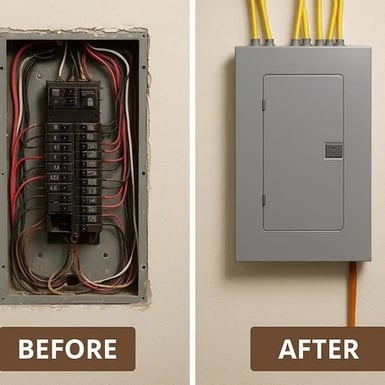
Most homeowners have no idea what good electrical work looks like. A before-and-after shot of a panel upgrade, tangled old wiring on the left and clean labeled breakers on the right, communicates competence faster than any amount of copy.
But photos do more than just demonstrate skill. They make your reviews more credible too. 60% of consumers feel that customer photos in reviews make them more authentic and trustworthy, and that trust gap matters in a trade where the homeowner is letting a stranger into their home and handing them access to their electrical system. A written five-star review says you did good work. A photo of the finished work proves it.
Research shows that 80% of consumers find photos from other customers more valuable than official images from the business itself. That's worth sitting with. Your own marketing photos, however well shot, carry less weight than a real customer's snapshot of the job site. Unpolished, real, and attached to a named review is exactly what builds trust with someone who's never hired you before.
This is where the two strategies connect. When you collect reviews through NiceJob, you can prompt customers to include a photo of the completed work as part of the review request. The customer gets a simple link, they leave their review, and if they add a photo, that image shows up on your Google Business Profile attached to a real name and a real rating. No separate content workflow. No asking twice. The review and the photo come in together.
The before-and-after content you post on Google and Instagram is the more deliberate, curated version of the same idea. You control the framing, the caption, and what the shot focuses on. Both have a role. The customer photo in a review signals authenticity. The branded before-and-after you post signals expertise. Together, they cover the two things a homeowner needs before they call: proof that the work gets done right, and confidence that other people have trusted you to do it.
Where you post matters more than how polished the photos are. GBP photos influence local pack visibility and get seen by people actively looking to hire someone today. Post there first, every time. Instagram is useful for brand awareness and reaching homeowners earlier in the decision process, but it's not where someone goes when they need an electrician right now.
You don't need a photographer. A smartphone shot in decent light, with a caption that includes the neighborhood and city, does the job. The location detail isn't just context, as it tells Google the work is relevant to local searches in that area.
This week: photograph every job. Before you pick up your tools, ask the homeowner if they're comfortable with you taking a before-and-after shot for your business profile. Most will say yes, especially if you mention it'll help other homeowners see the quality of your work. Take the before shot when you arrive and the after shot before you leave. Target two new photos posted to your GBP each week.
You could also make the permission ask a standard part of the job wrap-up script, the same touchpoint where techs mention the review request. One conversation, two asks, both on record.
Strategy 7: Seasonal Campaigns (Panel Upgrades, EV Chargers, and More)
Electrical demand follows predictable patterns. Electricians who build campaigns around those patterns fill their books during the slow stretches instead of scrambling.
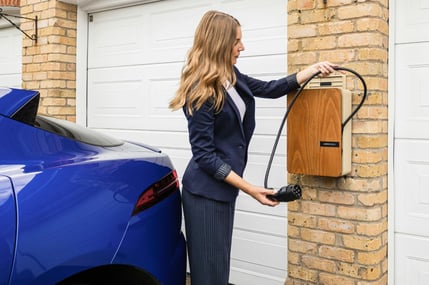
The best seasonal angles in 2026: EV(electrical vehicle) charger installations (residential demand keeps growing as adoption climbs), panel upgrades ahead of summer AC load, whole-home surge protection before storm season, and exterior holiday lighting in fall. Each one has a clear timing window you can plan backwards from.
A campaign doesn't need to be elaborate. Your past customer list is your best audience because they already know your work and need a lot less convincing than a cold prospect. The question is how to reach them without building a campaign from scratch every time demand shifts.
That's where NiceJob comes in. Instead of exporting a list and setting up a separate email tool, you can send a targeted message directly to past customers through NiceJob's campaign feature, timed to land a few weeks before your busy season starts. Pair that with a GBP post and a short Facebook ad running over the same window, and you have a coordinated push that covers the people who already trust you and the ones who are just discovering you.
This week: look at the next 3 months and pick one seasonal angle. Write a single email to your past customer list. NiceJob's Broadcasts feature sends it to your full customer base in one go.
Strategy 8: Email and SMS to Your Existing Customer List
The people who've already paid you and had a good experience are a far better audience than anyone you'd reach through a cold ad. They know your work and they're not starting from zero trust. However, most electricians never contact them again after the job closes, which means the next time that homeowner needs electrical work, they're doing a fresh search as if you don't exist.
A basic automated follow-up sequence fixes that without adding manual work. A review request goes out right after the job. A check-in message goes out 90 days later pointing to a seasonal service. An annual safety inspection reminder goes out around the same time each year. Three touches per customer, per year, all automated.
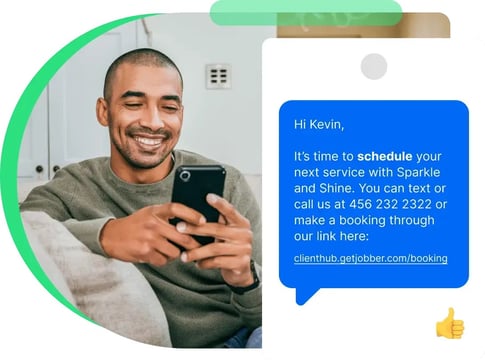
This week: export your customer list from your job management software and get it into NiceJob. You don't have to build the full campaign right away. Having your past customers in one place is the prerequisite for everything else, and when peak season is six weeks out, you'll be glad you're not starting from scratch.
Get ahead of peak season
Start your 14-day free trial with NiceJob Pro and use our campaign feature to reach past customers before demand spikes.
Start Free
Strategy 9: Your Website and What Actually Converts Visitors to Calls
Most electrician websites don't fail because they look bad. They fail because a homeowner lands on the page and can't quickly answer the three questions they actually care about: Can this electrician do what I need? Are they licensed and insured? How do I reach them right now?
The sites that convert well share a few things: a phone number visible on mobile without scrolling, service descriptions that use location language ("Panel upgrades in [City]" not just "Panel upgrades"), a live review widget showing your ratings, and a contact form that asks for a name, number, and brief job description. Nothing more.
If you work across multiple neighborhoods or towns, build a dedicated landing page for each one. A page titled "Electrician in [Neighborhood]" with localized copy and reviews from customers in that area ranks well for hyperlocal searches and converts better than a generic services page. This is the website side of local reputation marketing. Localized pages and real local reviews working together is one of the stronger SEO signals you can build.
This week: open your website on your phone and time how long it takes to find the phone number and understand what you offer. More than 5 seconds on either is the first thing to fix.
Strategy 10: Track What's Working (Reviews, Calls, Bookings)
Most electricians check their star rating occasionally and call it done. But your review profile is more like a live ranking signal than a static score, and if you're not tracking it monthly, you're missing the patterns that actually tell you whether your reputation is building or stalling.
The numbers worth watching are simple: total Google review count, average rating, and how many new reviews came in this month compared to last. If new reviews have slowed down, your local pack ranking is likely to follow. If a particular month shows a spike in negative sentiment, something changed operationally and it's worth finding out what before it compounds.
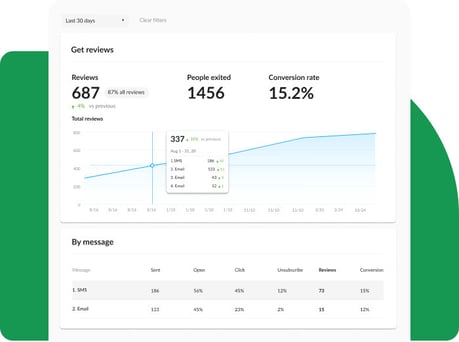
This is where NiceJob Insights earns its place. Rather than reading through every review yourself, Insights automatically flags recurring themes across your review history, both what customers consistently praise and what keeps surfacing as a problem. For an electrical business, that might mean noticing that customers love your response time but repeatedly mention confusion around pricing. That's not just reputation data, it’s a service delivery signal you can act on before it starts costing you bookings. For how all of this connects to rankings, see our guide on SEO and reputation management.
NiceJob Pro also includes competitor review tracking, so you can benchmark your review velocity and rating against other electricians in your market. If a competitor is pulling ahead in review count, you'll see it early enough to respond rather than wonder why your rankings shifted.
This week: Pull up your Google Business Profile and note your current review count and average rating. Set a recurring monthly reminder to check both. Add a NiceJob Insights review to that same cadence so you're reading the pattern, not just the number.
How NiceJob Helps Electricians Automate Reviews and Referrals
Every strategy in this guide works better when the post-job workflow runs automatically. The challenge for most electricians isn't knowing what to do. It's that review requests, referral asks, and seasonal follow-ups need to happen after every single job, reliably, without anyone on your team having to remember.
NiceJob is a growth software built specifically for service businesses. Here's what it handles automatically:
Review requests. NiceJob sends a personalized review request via text and email after every job closes, timed to land when the customer is most likely to respond. No manual follow-up required.
Referral campaigns. Once a review comes in, a referral invitation goes out automatically through NiceJob Pro, asking the customer to pass your name along to anyone in their network who needs an electrician.
Seasonal broadcasts. NiceJob Pro’s Broadcasts feature lets you send a targeted message to your full past customer list in one go, timed to land before peak demand hits.
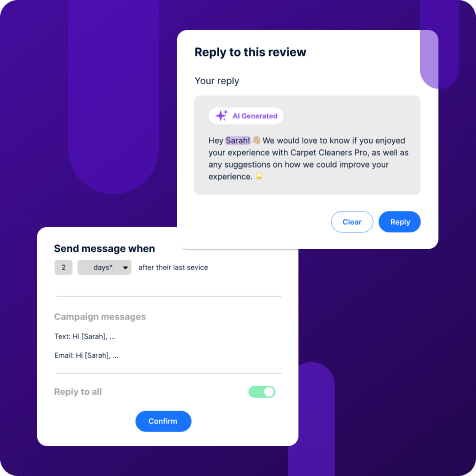
AI-powered review replies. NiceJob Pro drafts a professional response to every new review so your profile stays active and engaged without adding to your workload.
All of it connects to the job management software most electricians already use, including ServiceTitan, Housecall Pro, and Jobber, so nothing requires a new process from your crew. Businesses on NiceJob average a 4x increase in review volume. For electricians, that means a stronger local pack position, a profile that earns trust before a homeowner ever calls, and a schedule that fills from reputation rather than from constantly chasing new leads.
See how NiceJob helps electricians get more reviews and referrals automatically
Start your 14-day free trial.
Start Free
FAQ
How much should an electrician spend on marketing?
Most home service businesses allocate between 5% and 12% of gross revenue to marketing, though the right number depends on whether you're in growth mode or maintaining a full schedule. For most sole operators, the more useful question is where to spend rather than how much. Putting money into paid ads while your GBP has 11 reviews is a poor use of any budget. The highest-return dollars go to reputation building first, and a lot of the strategies in this guide cost more time than money to get running.
What's the best way to get electrician leads?
Referred leads tend to be the best quality. They arrive pre-sold, are less likely to shop around on price, and leave reviews when they're happy. For volume, Google local pack visibility is where most booked jobs come from in competitive markets, and that's driven by GBP optimization and review count more than anything else. Paid platforms like Angi and HomeAdvisor are useful once your profile has enough reviews to stand out. Build the organic foundation first.
Do electricians need social media?
It's useful, but not urgent. Instagram and Facebook work well for brand awareness and targeted local ads. Nextdoor is underrated for neighborhood-level word-of-mouth. Though it’s important to note that none of that should be prioritized before your GBP, your reviews, and a website that works on mobile. If you have 8 Google reviews and a homepage that loads slowly on a phone, social is a distraction. Sort the fundamentals first, then use social to amplify what's already working.
Conclusion
The best electrician in your city isn't always the one who wins the most jobs. Most of the time it's the one who shows up first in the local pack, has 80 reviews when the next guy has 12, and stays in front of past customers long enough that when a panel needs replacing, there's no question who they're calling.
None of the strategies in this guide are complicated. What they require is consistency: the same actions, after every job, without anyone having to remember to do them. That's where most electricians get stuck. A review request that didn't go out. A referral ask that got skipped. Over a hundred jobs a year, those gaps add up to missed rankings, missed referrals, and customers who went back to Google and found someone else.
NiceJob closes those gaps automatically, so your reputation keeps building whether you're on the job or not.
NiceJob helps turn happy customers into more reviews and referrals automatically
Start Your Free 14-Day Trial.
Start Free
.png)