•
Blog

Ranking on page one of Google used to be the finish line for local SEO, and now it's closer to a prerequisite. A business can hold a strong spot in Google's local pack and still never come up when a customer asks ChatGPT or Gemini for a recommendation.
That gap matters most for home service businesses, since customers already ask AI assistants questions like "best plumber near me" instead of scrolling through search results. The businesses winning Google's local pack and the businesses AI assistants actually recommend are turning out to be two different lists, and the difference comes down to signals most local SEO checklists never covered. Below are the AI search statistics for local businesses that matter most going into 2027, based on what showed up in 2026, why the gap exists, and what closes it.
The Numbers: AI Search Adoption Continues to Grow
SOCi's 2026 Local Visibility Index analyzed nearly 350,000 business locations across 2,751 multi-location brands. ChatGPT recommended 1.2% of them, Perplexity recommended 7.4%, and Gemini recommended 11%. By contrast, in Google's classic local three-pack, those same brands showed up 35.9% of the time. Depending on which assistant a customer opens, earning a mention is somewhere between three and 30 times harder than earning a spot in traditional local search.
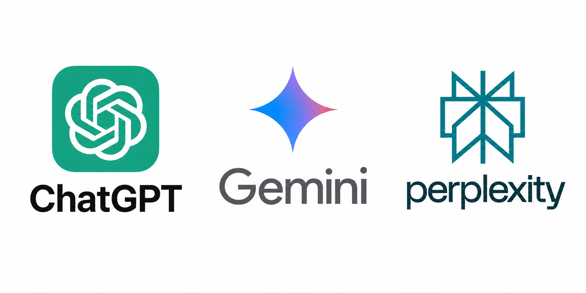
Whitespark's tracking backs this up from a different angle, with AI Overviews now appearing on 68% of local business queries, versus 39% for the local pack on those same searches. For most local queries now, the AI-written answer is what a customer sees first, and often the only thing they see.
Why Ranking Well on Google No Longer Guarantees AI Visibility
Google and AI assistants aren't reading the same signals. Google still leans heavily on proximity, category match, and citation volume. AI assistants behave more like they're weighing confidence, by looking at how consistent and well-reviewed a business appears across every source they happen to pull from, not just one profile.
SOCi's data shows how often that plays out. In retail, only 45% of the brands leading traditional local search also ranked among the most AI-recommended brands. Put differently, more than half of these businesses that "win" on Google are invisible when a customer asks an AI assistant instead. The businesses AI did recommend also cleared a higher bar on reviews, with ChatGPT's picks averaging 4.3 stars rather than a perfect five, which is higher than what usually gets a business into a Google local pack listing. Recency carries similar weight, with 74% of consumers only trusting reviews from the last three months, and AI systems appear to weigh reviews the same way.
For home service companies, that's a definite issue, since whatever got a plumbing or HVAC business onto page one of Google doesn't carry over automatically with AI. AI systems read review depth, response rate, and cross-platform consistency as trust signals, not just as ranking inputs.
What This Means for Home Service Businesses Specifically
Home services sit right in the category where someone is likely to ask an AI assistant for a name instead of scrolling results. That's the exact type of behavior behind the 68% AI Overview figure above, and it applies just as much to "who can fix my furnace tonight" as it does to routine searches.
The businesses getting named tend to share two things: information that matches everywhere it appears, and reviews that are recent, plentiful, and actually answered.
Owner Replies Are a Trust Signal AI Systems Notice
Owner replies are the part of a review profile that can be easy to overlook. A wall of five-star reviews with no responses doesn’t read the same to an AI system as a review history where someone on the other end is paying attention. A reply shows the business is still active, and a steady record of reviews and responses appears to be easier for AI systems to trust than reviews alone.
That’s a hard standard to hit with inconsistent review requests, and it’s a large part of why reviews carry real SEO weight well beyond a star average. A business that asks every customer for a review and answers each one that comes in, builds a record that AI systems can verify across several sources at once.
Something like NiceJob’s software, which pairs review request automation with AI replies (available on NiceJob Pro) in one workflow, makes it easier to manage both without the effort falling on any single person to remember. For a full breakdown of what that work looks like in practice, see How Home Service Companies Get Found in AI Search.
FAQ
Is AI search actually affecting local businesses today, or is this still early?
It's measurable now, not theoretical. SOCi's figures come from nearly 350,000 real business locations, and Whitespark's AI Overview numbers come from tracked search results, not a survey.
Does a strong Google Business Profile guarantee good AI visibility?
No. SOCi found fewer than half of retail brands leading Google's local search also lead in AI recommendations. The two overlap, but one doesn't guarantee the other.
What separates businesses AI recommends from the ones it skips?
Review quality and consistency show up as the biggest factors in SOCi's data, followed by business information that matches across every platform an AI system might check.
Do all AI platforms work the same way?
No. ChatGPT's usage stats put it as the most selective, recommending just 1.2% of local businesses SOCi tracked, compared to 11% on Gemini. A business invisible on one assistant can still show up on another.
Want to close that gap?
Read our full guide on how home service companies get found in AI search.
Learn More